7 different usages of SHOULD in English

Should is a modal auxiliary verb in English. Like an auxiliary verb, it supports or helps the main verb of a sentence. In this post, we will master different use …
Should is a modal auxiliary verb in English. Like an auxiliary verb, it supports or helps the main verb of a sentence. In this post, we will master different use …
Ditransitive verbs are very common in English. It is possible that you might not have heard this name but I promise you that you have been using ditransitive verbs for …

‘Was’ and ‘were’ are verbs that we use in the past tense. In this article, we will master 3 different usages of was and were and the difference between was …

In this post, we learn what linking verbs are, and what they do in a sentence. What are linking verbs in English? Linking verb definition: A linking verb is a …

IS, AM & ARE are the most used verbs (helping and main) in English. In this post, we will learn how to use is, am, are in English. Different use …

This post helps us understand what an action verb is, how it looks like, and different types of action verbs in English. What is an action verb in English? An …
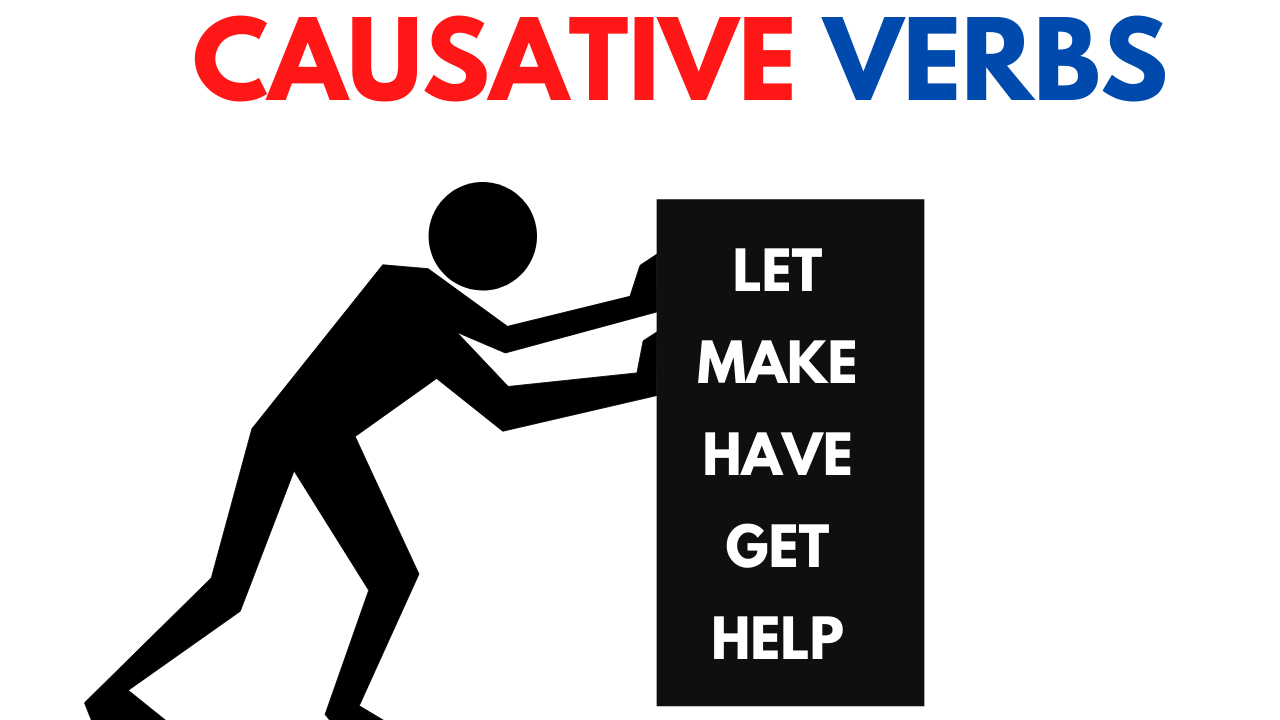
This post helps you understand causative verbs in English and how to use them. What are causative verbs? Causative verbs, as the name indicates, are the verbs that indicate that …

Many students fail to understand the difference between see, look, and watch and use them interchangeably. All these words have different meanings and should be used accordingly. Let’s understand them …

Many students get confused about what to use: can or could. Can and could are modal verbs (auxiliary) that support the main verb. Both can and could often confuse English …

In the post, we learn what linking verbs are, what stative verbs are, and what the difference between linking verbs and stative verbs is. What is a linking verb? Linking …